On this page

A revocable trust can be a useful estate-planning tool, but the document is only one part of the project. The practical question is whether the intended assets and instructions actually connect to the trust. A beautiful binder does little for a Stanly County family if the relevant accounts remain outside the arrangement or the successor trustee cannot locate them.
Begin with the problem you want to solve
People consider trusts for different reasons: continuity during incapacity, management for beneficiaries, privacy, or administration of property at death. Explain the objective in everyday language. For example, you may want a responsible adult to manage funds for a child over time rather than distribute everything at once. Another family may be most concerned about coordinating property in more than one state.
A trust is not automatically necessary because someone owns a home, and it does not automatically eliminate taxes or protect assets from every creditor. Ask how the proposed trust addresses your actual concerns and how its costs and ongoing responsibilities compare with alternatives.
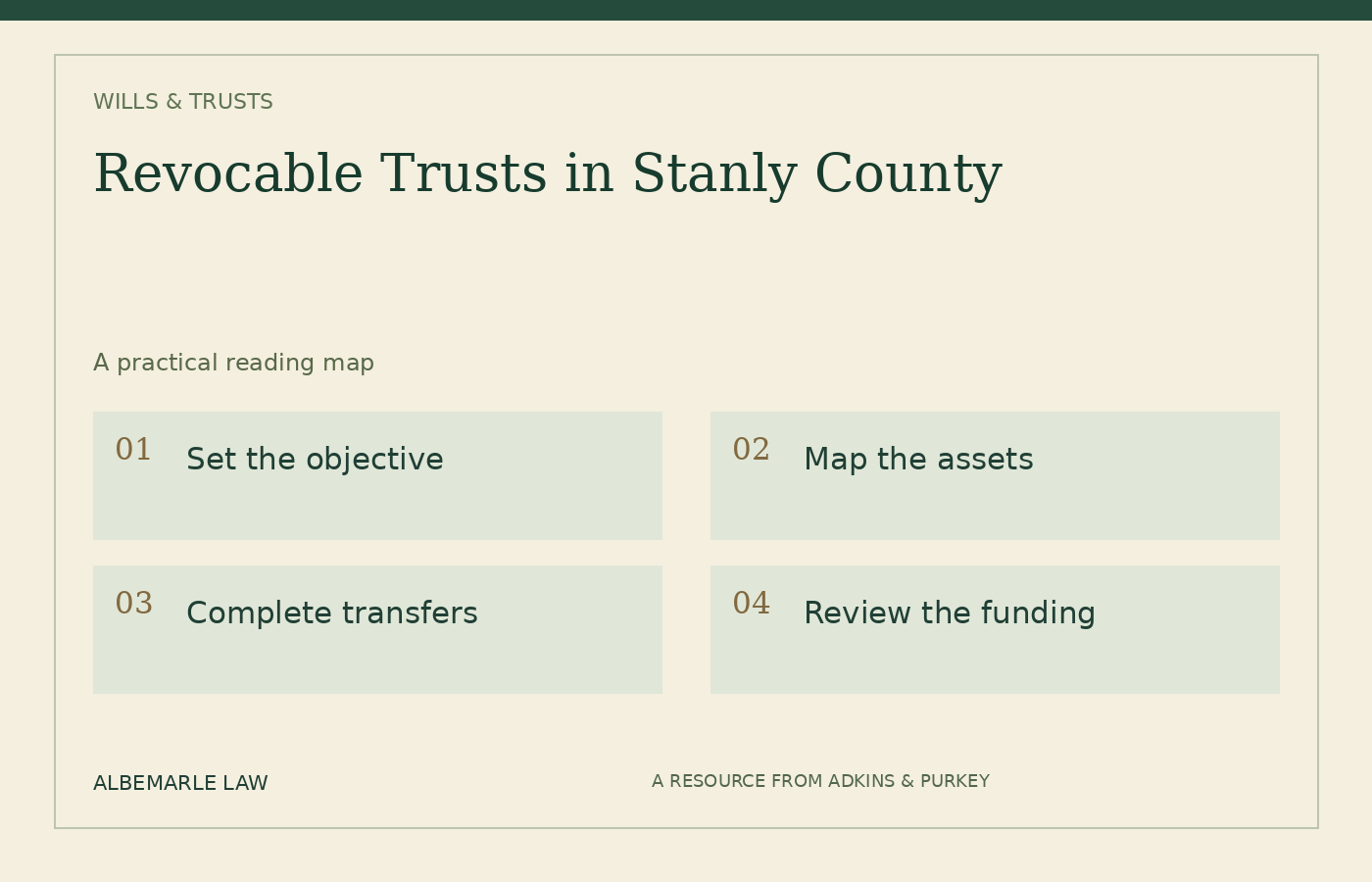
Map ownership asset by asset
Funding often means transferring appropriate property into the trust or coordinating beneficiary arrangements with it. The correct method differs for bank accounts, real estate, business interests, and other assets. Retirement accounts require particular care; changing ownership or beneficiary instructions without advice can create serious tax or distribution consequences.
Make a table with four columns: asset, current owner, intended treatment, and completion evidence. This transforms a general instruction to fund the trust into a set of trackable tasks. Keep confirmations, recorded documents where applicable, and contact information for the institutions involved.
Treat real estate as its own project
A home in Albemarle or family land elsewhere in Stanly County involves more than a typed asset schedule. Have the deed, legal description, ownership interests, loan terms, insurance, and any transfer restrictions reviewed. A lawyer can identify whether a deed or other action is appropriate and how the transfer fits the larger plan.
Do not assume that listing an address in a trust automatically changes title. Equally, do not record an internet deed without understanding its consequences. The property may have co-owners, a prior interest, or other features that are not visible on a tax bill.
Choose and prepare the successor trustee
The successor trustee needs both authority and usable information. Explain where records are kept, how advisers can be reached, and which assets need immediate attention. A family business, rental property, or residence can require ongoing decisions while beneficiaries are still grieving.
Discuss standards for distributions and the practical needs of beneficiaries. A broad instruction that sounds flexible may generate disagreement if the decision maker and family have different expectations. Carefully chosen terms and a capable trustee work together.

Keep the trust coordinated over time
New accounts, refinanced property, business changes, and updated beneficiaries can gradually separate the asset picture from the original plan. Review the funding checklist after significant transactions. Keep a related will, financial power of attorney, and health care documents coordinated; a trust does not replace every other planning document.
Ask for a clear completion list at the end of the legal engagement: what the lawyer will do, what you must do, and what requires an outside institution. A final review of completed tasks is often more valuable than assuming everything happened because the documents were signed.
Bring these to the conversation
- Existing trust and all amendments
- Asset ownership and beneficiary inventory
- Deeds, loan information, and business agreements
- A funding checklist with completion evidence
Questions readers ask
Does every asset belong in a revocable trust?
No. The appropriate treatment depends on the asset, ownership, tax consequences, beneficiary needs, and overall plan.
Does signing the trust transfer my house?
Do not assume so. Real-estate ownership and any necessary transfer documents must be reviewed separately.
Continue reading
Explore more guidance through Adkins & Purkey, the Lake Norman Brief, and Adkins Law in Huntersville. These resources do not replace advice about your individual case.
Attorney advertising. General legal information, not legal advice. Laws and procedures can change. Every matter requires individual review. Illustrations are conceptual and do not depict actual clients. No attorney-client relationship is created by this page or an initial inquiry.