On this page

Estate planning is easier to maintain when review becomes a routine rather than an emergency. You do not need to rewrite every document each year. You do need a way to notice changes in people, property, obligations, and priorities so a lawyer can determine whether an update is appropriate.
Start with life changes
List marriages, separations, divorces, births, adoptions, deaths, health changes, and moves since the last review. Note whether a beneficiary or decision maker has become unavailable, moved far away, or taken on responsibilities that make the role harder to perform.
A change does not automatically mean the entire plan is wrong. It does mean the assumptions behind the plan deserve attention. Bring a short timeline to the review rather than relying on memory during the meeting.
Compare the asset inventory with the documents
Add new accounts, property, insurance, and business interests. Remove closed or sold assets. Record ownership and beneficiary arrangements, not just balances. If you have a trust, check whether intended funding tasks were completed and whether later transactions changed the arrangement.
For an Albemarle home or other Stanly County real estate, keep the current deed and relevant loan information with the planning records. A refinance or ownership change may require coordination even if the property address remains the same.

Confirm people and contact information
Review executors, trustees, financial agents, health care agents, and alternates. Are they still willing and suitable? Do they know where documents are located? Do relevant institutions and providers have the appropriate current versions?
Avoid making informal handwritten changes to executed documents. If a revision is needed, ask counsel about the correct method and how old versions should be handled. Clear version control matters when someone later needs to identify the governing instructions.
Review beneficiary forms and special circumstances
Obtain current confirmations for significant accounts and insurance. Check primary and contingent beneficiaries, trust references, and percentages. Consider whether a beneficiary's age, disability, benefits eligibility, financial situation, or family circumstances now call for a different arrangement.
Bring any new court orders, marital agreements, or business contracts that may affect the plan. Legal documents created for another purpose can still change estate-planning choices. Coordinate with tax and financial advisers where the review identifies issues outside the estate lawyer's role.
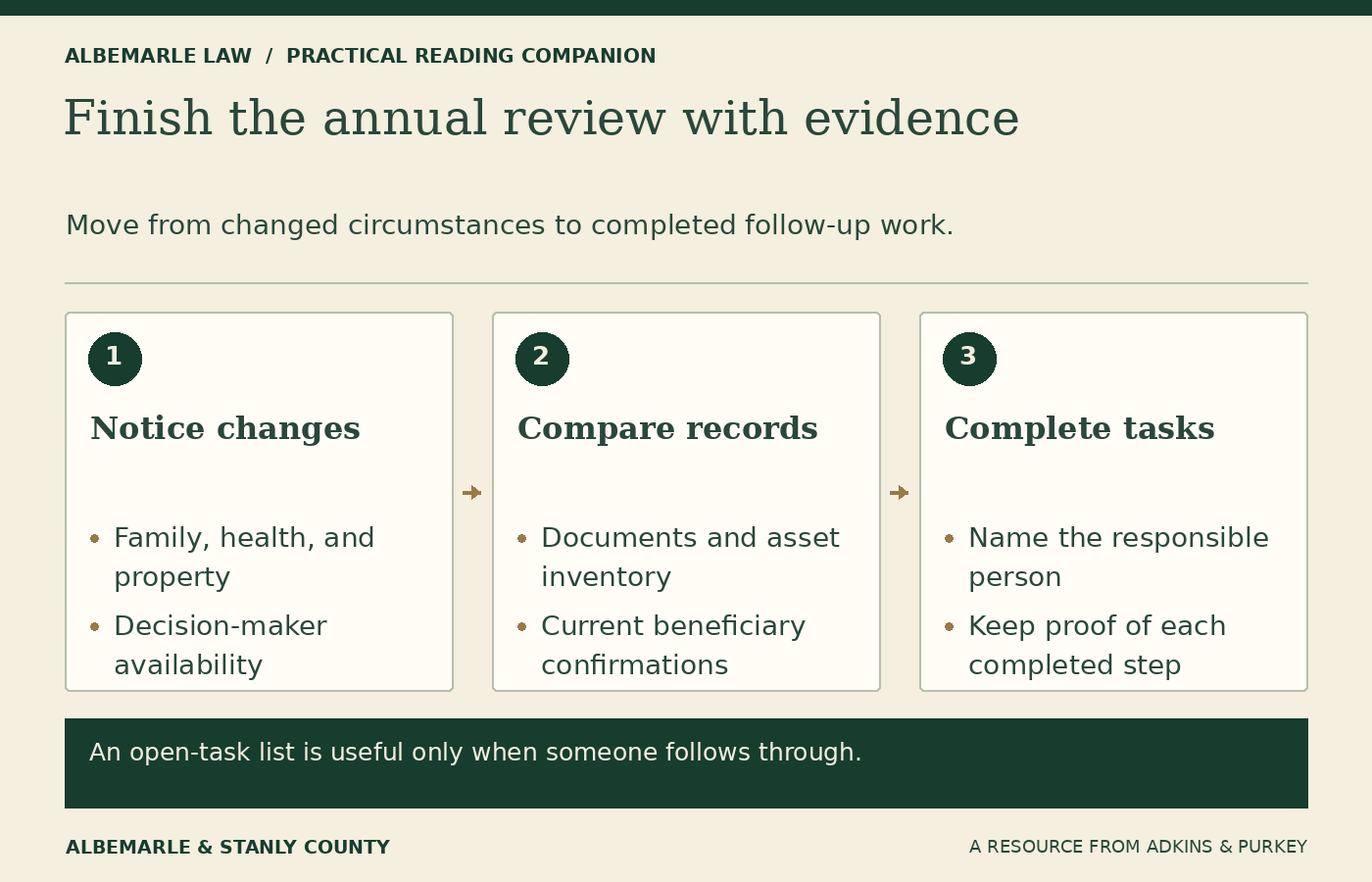
Finish with an action list
Divide tasks into those counsel will handle, those you will handle, and those requiring an institution or another professional. Assign a practical completion date and retain evidence when each task is done. A review that identifies gaps but leaves no follow-through can create false confidence.
Keep the final checklist with your secure planning records. Review again after a major life event rather than waiting for the next annual date. The purpose is modest and concrete: make sure the plan still reflects your wishes, the right people can act, and the assets connect to the instructions you intended. Adkins & Purkey can discuss the legal questions that arise from that review and help identify an appropriate next step.
Bring these to the conversation
- Life changes since the last review
- Updated asset and beneficiary inventory
- Current documents and decision-maker contacts
- Open tasks with responsibility and completion evidence
Questions readers ask
Do I need a new will every year?
Not necessarily. A periodic review identifies changes; counsel can determine whether an amendment, replacement, or no document change is appropriate.
What should I bring to a review meeting?
Existing documents, an asset and beneficiary inventory, relevant agreements, and a brief list of family or financial changes.
Continue reading
Explore more guidance through Adkins & Purkey, the Lake Norman Brief, and Adkins Law in Huntersville. These resources do not replace advice about your individual case.
Attorney advertising. General legal information, not legal advice. Laws and procedures can change. Every matter requires individual review. Illustrations are conceptual and do not depict actual clients. No attorney-client relationship is created by this page or an initial inquiry.