On this page

A family home or tract of land can carry memories that are difficult to express in a balance sheet. In Stanly County, property may also connect generations through farming, a business, or a place where relatives gather. Estate planning should honor those connections while addressing the practical questions that future owners will face.
Begin with the deed and the ownership history
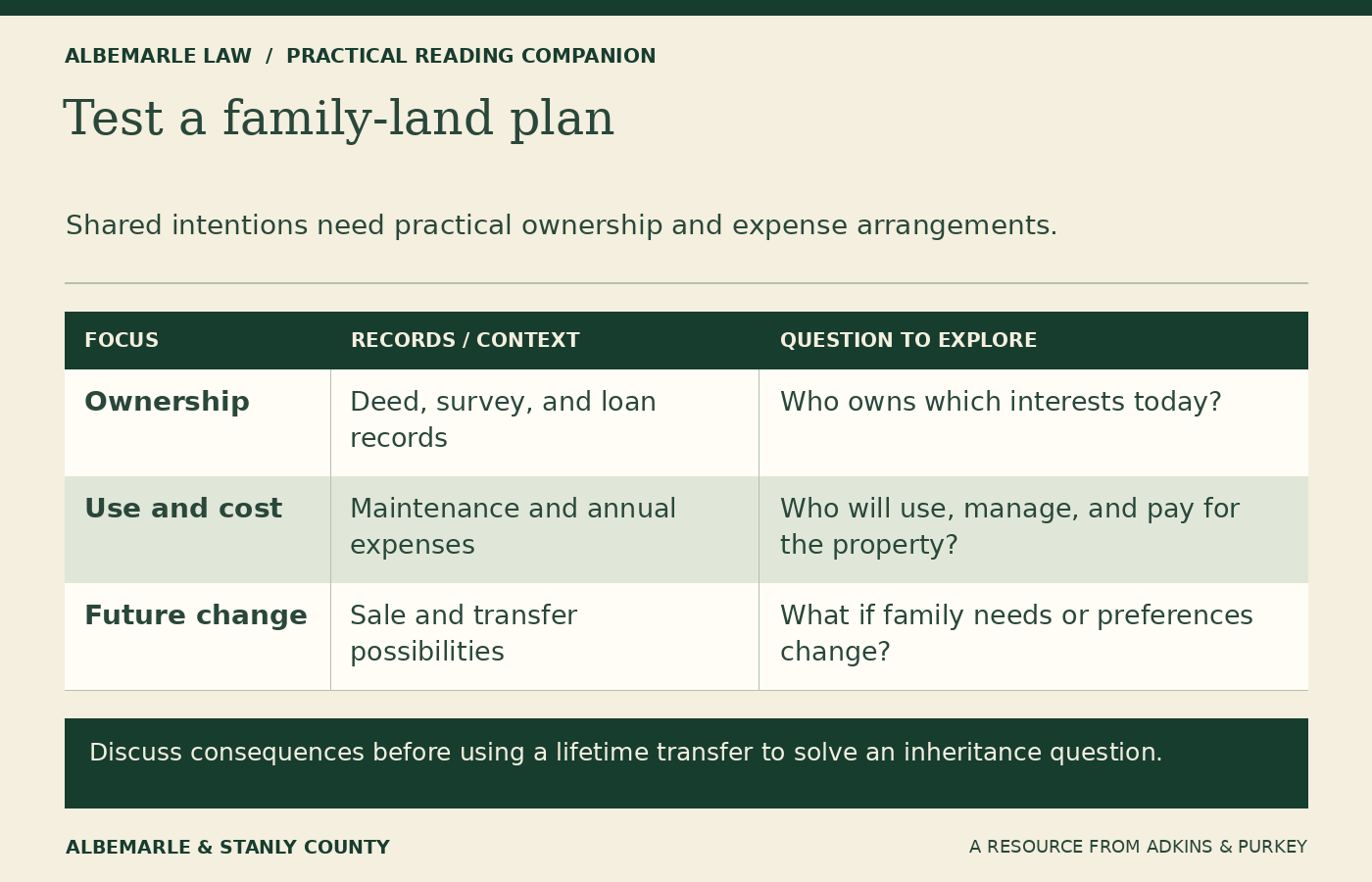
Find the current deed, survey if available, loan information, and any recorded agreements or easements. A tax record is useful background but is not a substitute for reviewing title. Determine whether ownership is shared, whether a trust is involved, and whether earlier estate matters left unresolved interests.
Tell the lawyer about family understandings, but distinguish them from documented rights. A relative who has maintained the property for years may have expectations that differ from the legal ownership picture. Clarifying the starting point is essential before choosing how the property should pass.
Ask whether shared ownership will work
Leaving land to several children may seem fair, yet it can create difficult decisions. Who may live there? Who pays taxes, insurance, repairs, and improvements? What happens if one owner wants to sell, needs cash, or dies? How will disagreements be handled?
Discuss these scenarios openly. The goal is not to assume conflict, but to avoid leaving the next generation without a decision-making framework. Depending on the property and objectives, counsel may discuss different ownership structures, agreements, trusts, or other arrangements.

Separate sentimental value from carrying costs
A property that no one can afford to maintain can become a burden even when everyone loves it. Prepare a realistic annual expense picture and identify major repairs or environmental concerns. If the plan expects one beneficiary to remain in the home, consider how expenses and other beneficiaries' interests would be handled.
Liquidity matters. Other estate assets may be needed for administration, debts, taxes, or equalizing gifts. Do not assume the land can remain untouched regardless of the estate's obligations. Review the entire asset picture rather than treating the real estate in isolation.
Be careful with lifetime transfers
Adding someone to a deed or giving property away can affect control, taxes, creditors, eligibility for benefits, and the recipient's circumstances. A change that appears simple at the register of deeds can have consequences far beyond recording fees.
Get advice before transferring a home to a child or reserving a particular interest. Explain whether the objective is inheritance, management during incapacity, avoiding a perceived court process, or something else. The appropriate method depends on the actual goal and the legal and financial tradeoffs.
Record intentions and keep the plan current
A written plan should connect the deed, will or trust, beneficiary choices, and any family agreement. Keep copies of supporting documents and note where originals are held. Review after a sale, subdivision, refinance, marriage, divorce, death, or change in the family's intended use.
For an Albemarle residence, a rural tract, or a family business property, the best starting point is often a focused document review. Bring the records and describe what you hope the property will mean to the next generation. That allows the legal structure to follow the family's goals while making the responsibilities clear.
Bring these to the conversation
- Current deed, survey, and loan records
- Known ownership interests and agreements
- Annual costs and major maintenance needs
- Family goals and possible future sale scenarios
Questions readers ask
Is a tax listing enough to prove title?
No. Have the deed and relevant title history reviewed; tax records are only part of the information.
Should I add my child to the deed now?
Do not make that decision without reviewing control, tax, creditor, benefits, and family consequences with appropriate advisers.
Continue reading
Explore more guidance through Adkins & Purkey, the Lake Norman Brief, and Adkins Law in Huntersville. These resources do not replace advice about your individual case.
Attorney advertising. General legal information, not legal advice. Laws and procedures can change. Every matter requires individual review. Illustrations are conceptual and do not depict actual clients. No attorney-client relationship is created by this page or an initial inquiry.