On this page

An estate plan can change without anyone rewriting the will. Opening a new account, changing jobs, refinancing, or completing a beneficiary form can alter where substantial property goes. A beneficiary review brings those separate decisions into one place so an Albemarle or Stanly County family can see whether the pieces still fit.
Build the list before changing anything
Start with life insurance, retirement accounts, employer benefits, annuities, and accounts with payable-on-death or transfer-on-death instructions. Identify the institution, account type, owner, and current primary and contingent beneficiaries. Include policies from former employers and smaller accounts that are easy to overlook.
Use the institution's current confirmation rather than memory or an old application. The account balance statement may not show beneficiary information. If information is missing, request it through the institution's official process and keep the response with your planning records.
Compare the result with your intentions
Ask what would happen if you died under the current arrangement. Does a former spouse remain listed? Is a deceased relative still a beneficiary? Are percentages complete? Is there an alternate recipient? Does a trust name match the actual trust document?
These questions identify issues; they do not mean every designation should be changed immediately. Divorce orders, agreements, spousal rights, plan rules, and tax consequences can affect the available choices. Have those constraints reviewed before acting.
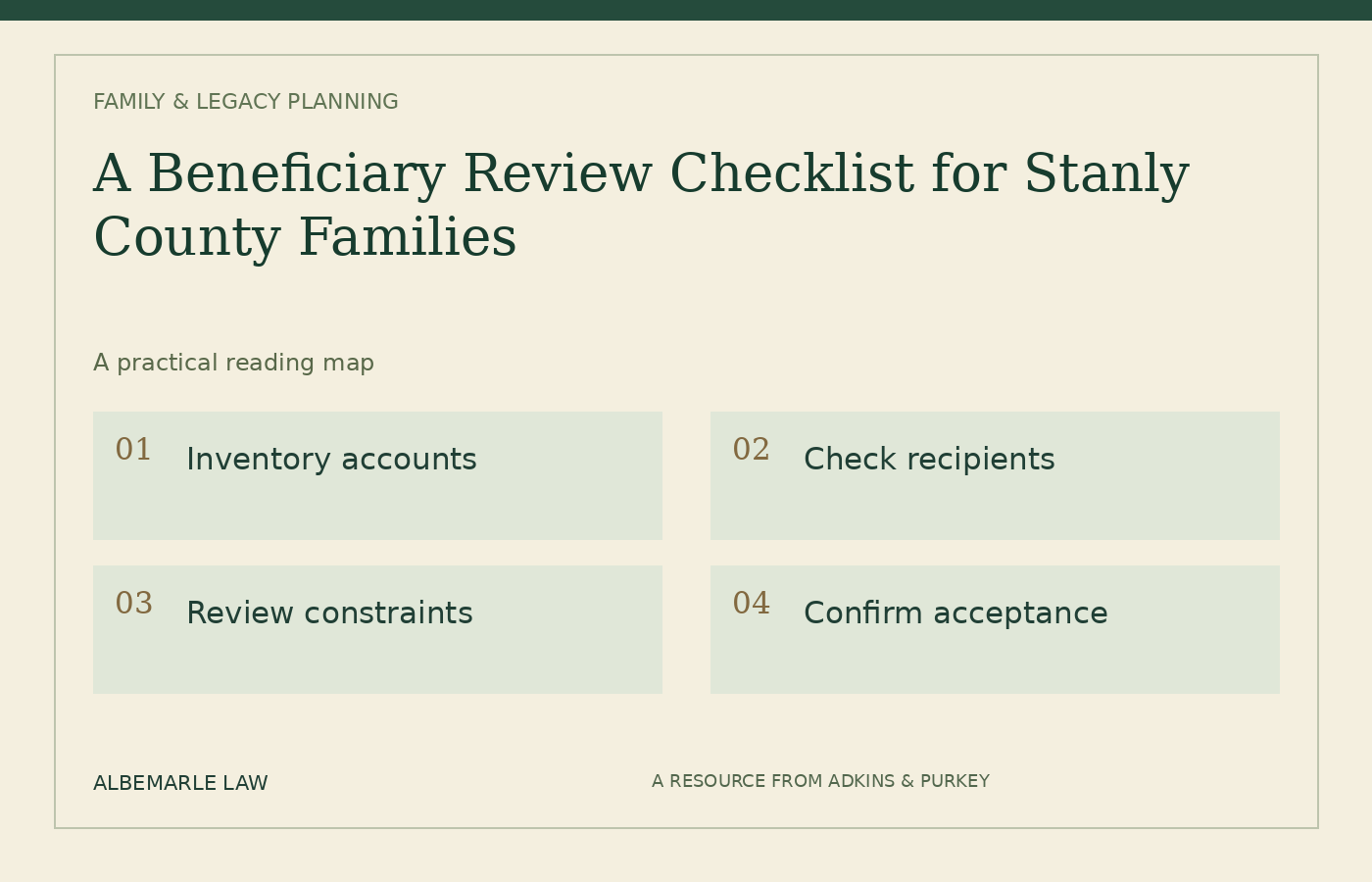
Consider the recipient's circumstances
A direct payment may be suitable for one beneficiary and problematic for another. Minors, people who receive means-tested benefits, and people who need help managing money may require a different arrangement. Naming a trusted adult with an informal request to use the money for someone else can create risks because the legal effect may differ from the family understanding.
A trust may help in some situations, but naming one as a retirement beneficiary requires careful tax and distribution analysis. Do not copy a designation from a friend's plan. The same wording can produce a different result when family circumstances or account types differ.
Coordinate percentages and contingencies
Equal shares across a will do not guarantee an equal overall result when major assets pass separately. Likewise, dividing one account equally may not balance the entire plan. Consider the full picture, including debts, taxes, expenses, and property that is difficult to divide.
Ask how the institution treats a beneficiary who dies first and whether the form's options match your intended result. Review names and identifying information carefully. A small clerical error can make administration more difficult even when intentions are clear.

Close the loop after submission
Keep copies of submitted forms and confirmation that the institution processed them. Add a review date to the asset inventory. If the request is rejected or requires additional information, resolve that issue instead of leaving the old designation in place unnoticed.
Repeat the review after marriage, separation, divorce, birth, death, a new trust, or a job change. An annual household paperwork review is also a useful moment to check whether anything changed. The purpose is coordination: your will, trust, ownership, and beneficiary instructions should tell a consistent story.
Bring these to the conversation
- Current institution-issued beneficiary confirmations
- Primary and contingent beneficiary details
- Relevant divorce orders or agreements
- Proof that submitted changes were accepted
Questions readers ask
Does my will override every beneficiary form?
No. Many assets pass under their own contracts or ownership arrangements. Review each asset separately.
Should I remove a former spouse immediately?
Get advice first. Orders, agreements, plan rules, and applicable law may affect both the ability and obligation to change a designation.
Continue reading
Explore more guidance through Adkins & Purkey, the Lake Norman Brief, and Adkins Law in Huntersville. These resources do not replace advice about your individual case.
Attorney advertising. General legal information, not legal advice. Laws and procedures can change. Every matter requires individual review. Illustrations are conceptual and do not depict actual clients. No attorney-client relationship is created by this page or an initial inquiry.