On this page

Parents often start estate planning with one question: who would care for the children? That question is essential, but it sits beside several others. Who would manage money? How would that person know what the child needs? What if the preferred adult cannot serve? A practical plan separates these responsibilities and then connects them.
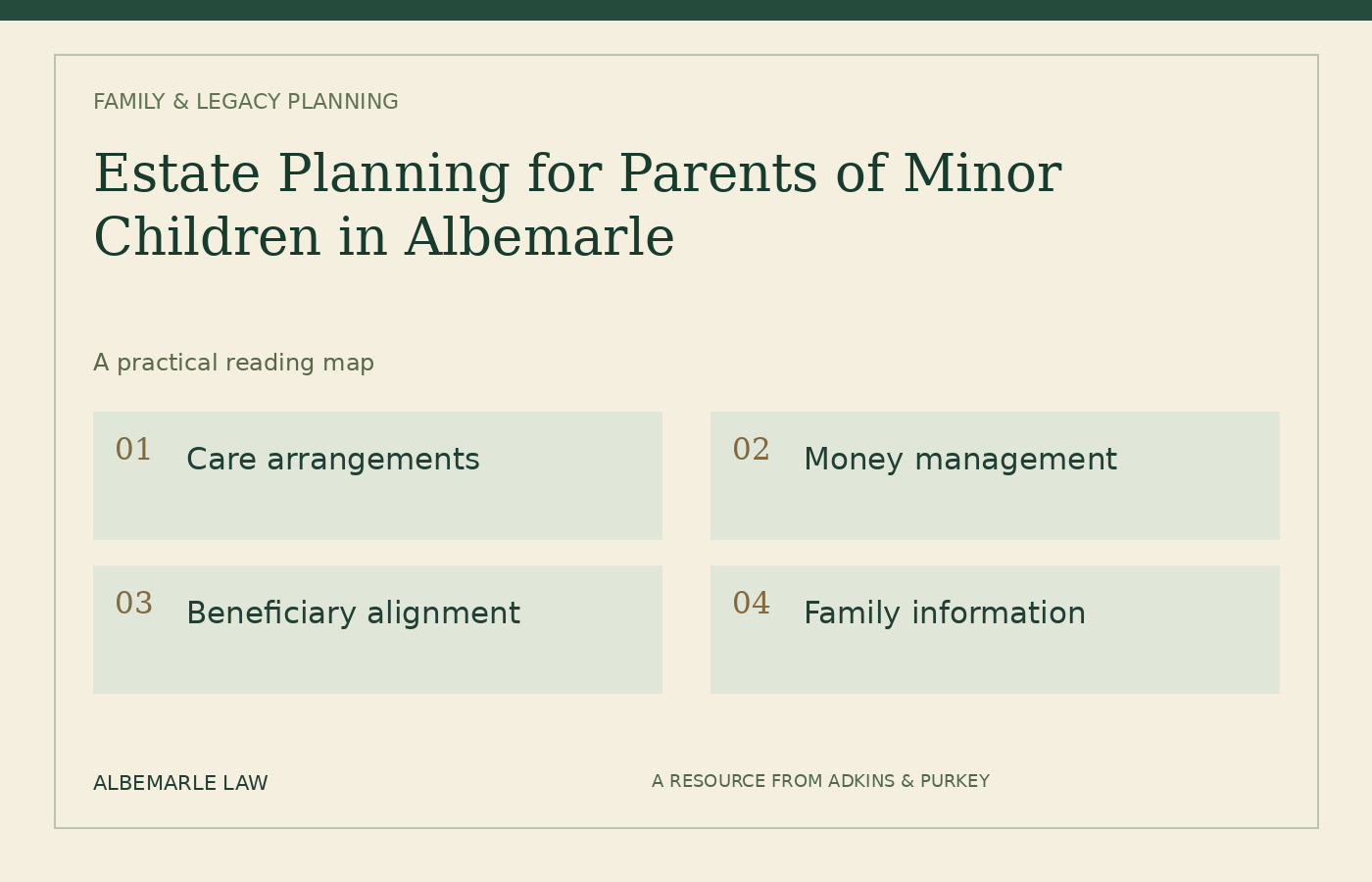
Think about care and money separately
The person best suited to daily parenting may not be the best person to manage a significant inheritance. Conversely, a skilled financial decision maker may not be able to provide a stable home. Discuss whether the same person or different people should fill the proposed roles and how they would work together.
A guardian nomination in estate documents does not override every other person's rights or remove the court's role. Existing parental rights, custody arrangements, and the child's circumstances require individual analysis. Bring current custody orders and related agreements to the planning meeting.
Explain what continuity means for your child
For a child in Albemarle or another Stanly County community, continuity might involve school routines, medical care, siblings, nearby relatives, or cultural and religious connections. Write down the practical information a caregiver would need. This is different from trying to control every future parenting decision in a legal document.
Discuss your preferences with the adults involved. An appointment made without a conversation can leave everyone with unrealistic assumptions about housing, work schedules, travel, and finances. Identify backups and revisit choices as people age or move.
Plan the form of the inheritance
An outright gift to a minor can create management complications. A lawyer can discuss trusts or other appropriate arrangements, the person who would manage funds, and standards for using them. The right plan depends on the assets, family situation, and intended duration of management.
Avoid assuming every child should receive everything at the same age or that the same distribution structure suits every beneficiary. Disability, benefits eligibility, financial maturity, and support needs may call for different provisions. Explain those circumstances openly so the plan can address them.
Coordinate life insurance and retirement benefits
Life insurance may supply important support if a parent dies, but the beneficiary designation needs to work with the estate plan. Naming a minor directly or relying on an outdated designation can frustrate otherwise thoughtful planning. Retirement accounts introduce additional tax and distribution questions that should be reviewed before a trust or other recipient is named.
Bring the actual beneficiary confirmation, including contingent beneficiaries. Do not rely on a statement that merely shows the account balance. After changes are submitted, retain proof that the institution accepted them.

Build a secure family information file
Create a separate record of emergency contacts, schools, medical providers, insurance, and the location of legal documents. Keep it current and accessible to appropriate people. Protect sensitive information; a general emergency contact card need not contain full account credentials or detailed medical history.
Review the plan after a birth, adoption, separation, divorce, remarriage, death, or major move. A young child's needs will change, and an adult who was the ideal choice five years ago may now face different responsibilities. Good estate planning makes room for that change while giving the family a clear starting point today.
Bring these to the conversation
- Custody orders and family agreements
- Caregiver and financial-manager choices
- Life insurance and beneficiary confirmations
- Children’s practical needs and backup plans
Questions readers ask
Does naming a guardian automatically decide custody?
No. A nomination is important planning information, but applicable parental rights and court procedures still matter.
Should I name my minor child directly on every account?
Direct designations can create management problems. Review the asset and an appropriate beneficiary structure with counsel.
Continue reading
Explore more guidance through Adkins & Purkey, the Lake Norman Brief, and Adkins Law in Huntersville. These resources do not replace advice about your individual case.
Attorney advertising. General legal information, not legal advice. Laws and procedures can change. Every matter requires individual review. Illustrations are conceptual and do not depict actual clients. No attorney-client relationship is created by this page or an initial inquiry.