On this page

The first weeks after a death can bring more paperwork than a family expects. Mail continues arriving, bills need attention, and relatives may ask about property before anyone has located the will. A careful first-month approach emphasizes preservation and information rather than rushing to distribute assets.
Attend to immediate needs and preserve records
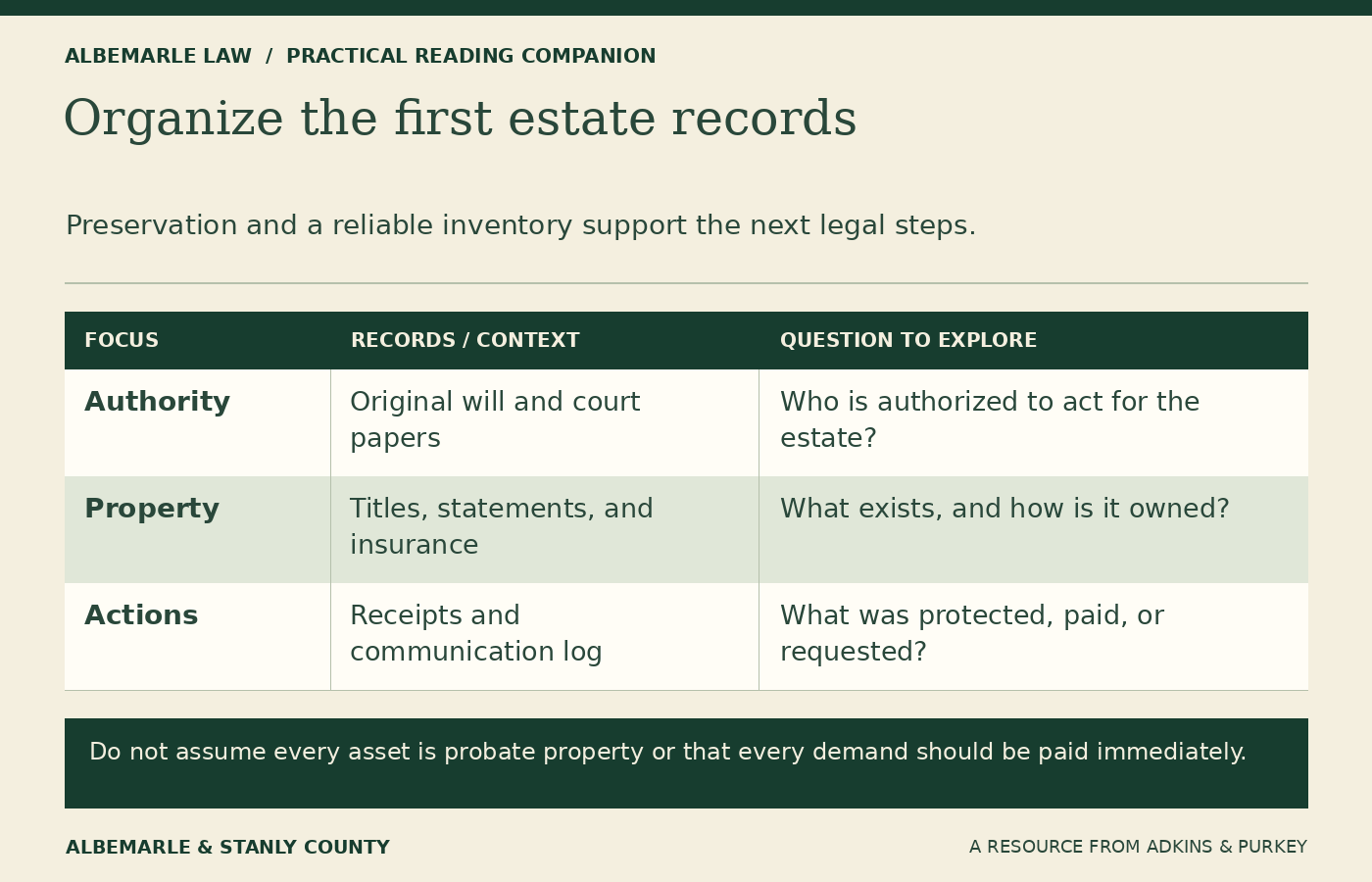
Locate available estate-planning documents, secure important papers, and arrange appropriate care for pets and property. Keep track of expenses paid by family members and retain receipts. Do not assume reimbursement is automatic; the nature of the expense and administration rules matter.
Protect an unoccupied home through appropriate arrangements for insurance, utilities, maintenance, and authorized access. Photograph valuable items where useful and maintain a record of what is moved for safekeeping. Avoid informal divisions of personal property before authority and the governing instructions are clear.
Identify who has authority
Being named executor in a will is not the same as having completed qualification through the court. A financial power of attorney generally ends at death. The person who handled bills during life may therefore need different authority afterward.
North Carolina estate administration commonly involves the clerk of superior court in the appropriate county. Not every estate requires the same procedure. The decedent's residence, assets, family situation, and available alternatives need review. For a Stanly County matter, consult the Judicial Branch's official courthouse and estates resources for current procedures and contact information.
Create an inventory without assuming ownership
List real estate, accounts, vehicles, insurance, business interests, digital assets, and debts. Record how assets are titled and whether beneficiaries or survivorship provisions apply. An item associated with the deceased person may not necessarily be an estate asset, and an account held with another person requires review of its actual terms.
Gather recent statements and a date-of-death asset picture where available. Keep original records organized by institution and property. Do not access accounts by pretending to be the deceased person or use credentials in a way that exceeds lawful authority.
Do not pay every demand immediately
Creditors, deadlines, priorities, and required notices are part of estate administration. A bill arriving in the mail does not by itself establish that a family member personally owes it. At the same time, ignoring all correspondence can create problems.
Collect demands and give them to the appropriate representative or lawyer. Before paying from estate funds or distributing money to beneficiaries, understand the process and preserve enough information to account for each transaction. Avoid mixing estate money with a personal account.
Organize communication with the family
A simple update can explain what has been found, what remains uncertain, and when further information is expected. Do not promise a distribution date before the asset and claims picture is known. Property sales, tax matters, disputed issues, or missing records can affect timing.
Bring the death certificate, original will if available, asset and debt information, and family details to an estate-administration consultation. The goal is to identify the right procedure and next steps, not to solve the entire estate in the first meeting. A methodical beginning can prevent avoidable conflict and costly corrections later.
Bring these to the conversation
- Original will and other planning documents
- Death certificate and family information
- Asset titles, statements, debts, and insurance
- Expense receipts and property-safekeeping records
Questions readers ask
May the named executor act immediately?
Court qualification and the scope of authority must be addressed. Being named in a will does not itself complete that process.
Must every estate follow the same probate process?
No. The appropriate procedure depends on assets, ownership, family circumstances, and available statutory options.
Continue reading
Explore more guidance through Adkins & Purkey, the Lake Norman Brief, and Adkins Law in Huntersville. These resources do not replace advice about your individual case.
Attorney advertising. General legal information, not legal advice. Laws and procedures can change. Every matter requires individual review. Illustrations are conceptual and do not depict actual clients. No attorney-client relationship is created by this page or an initial inquiry.