On this page
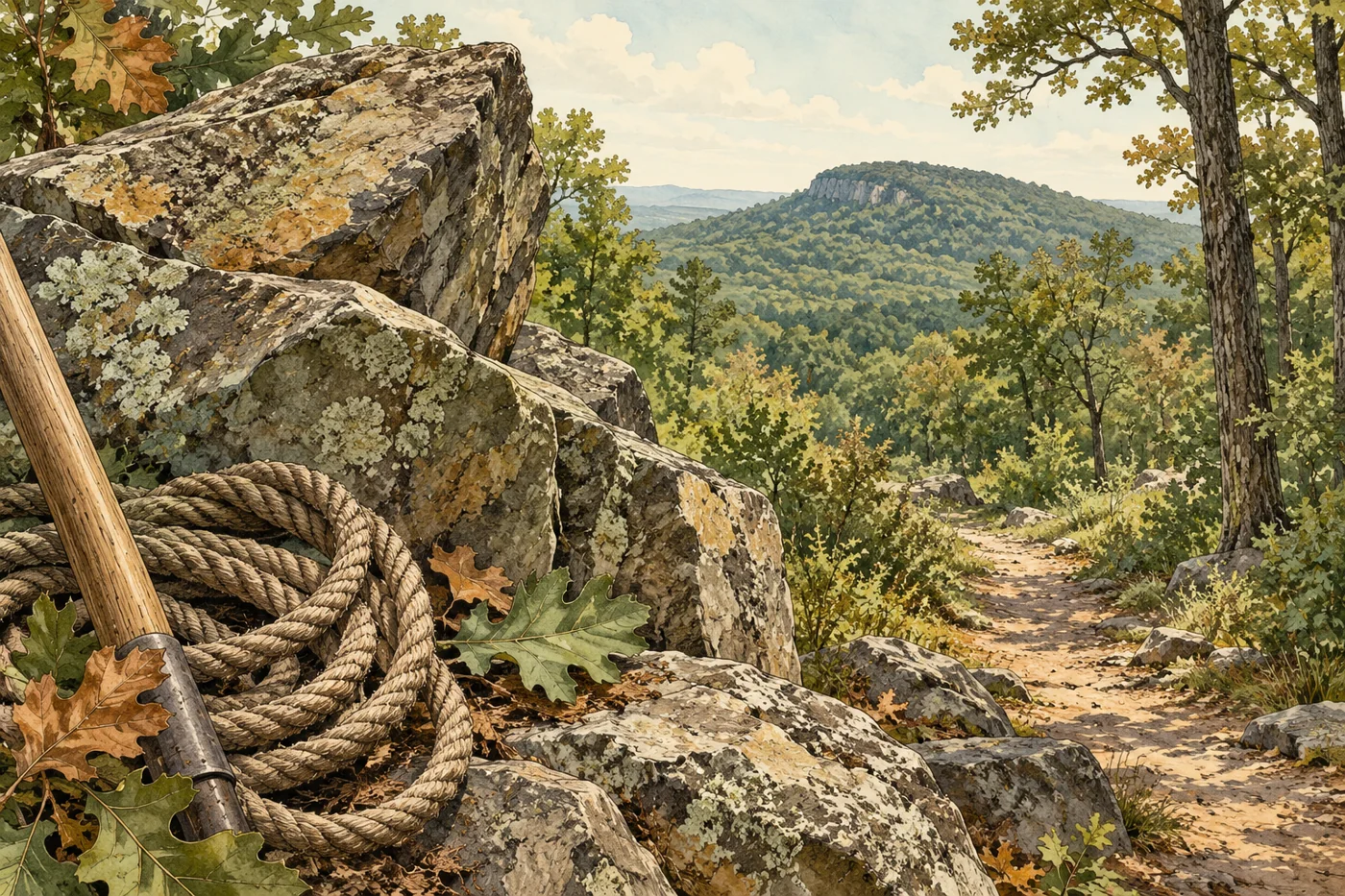
Morrow Mountain State Park is one of the clearest places to see how natural and cultural history belong together. The landscape east of Albemarle is valued for recreation, but it also contains evidence of long human use, nineteenth-century family life, and a twentieth-century public effort to create a park. A visit becomes more meaningful when those layers are considered together.
The park is in Stanly County and is managed by North Carolina State Parks. It is distinct from nearby Uwharrie National Forest. Our Uwharrie regional guide explains that difference; the official park website should be used for current maps, conditions, facilities, and visitor information.
Stone connects the landscape to people
The park's interpretation emphasizes the importance of local stone to Indigenous tool making. Rock was not merely scenery. Its properties could make it useful for producing tools, and access to suitable material connected particular places to wider patterns of movement and exchange.
When looking at a ridge or outcrop, consider the questions an archaeologist asks: what material is present, how was it worked, where else does similar material occur, and what evidence establishes timing? These questions require context and professional analysis. A visually interesting stone found on a walk should not be treated as a collectible historical object.
The Hardaway Site broadens the story
NC State Parks identifies the Hardaway Site as a major archaeological location associated with thousands of years of use and stone-tool production. Its educational page connects the site with nearby Morrow Mountain materials and ongoing interpretation of American Indian history. The same page states that the protected site is not open for ordinary public touring.
That access distinction is important. Learning about a significant site does not create permission to visit it. Consult the responsible organizations for any formally offered educational opportunities and avoid publishing or following informal directions into protected areas. The value of archaeology includes what remains in place for future research.

The Kron homesite and nineteenth-century life
The park's management history includes the home of Dr. Francis Kron, a Prussian-born immigrant who came to America in 1823. The homesite at the foot of Fall Mountain offers another scale of interpretation: the lives and work of a family within the larger landscape. It should be understood through the park's historical research rather than as a generic pioneer scene.
Historic house interpretation invites questions about medicine, horticulture, household labor, migration, and relationships with surrounding communities. Ask which structures or features are original, reconstructed, or interpreted through later restoration. Those distinctions do not diminish the site's value; they explain how visitors are able to encounter a past that no longer survives intact.
A local campaign became a state park
The park's General Management Plan describes a local committee's effort during the 1930s to establish a state park. By 1937, more than 3,000 acres had been acquired, with substantial land donated by Stanly County residents. The park opened to the public in the summer of 1939.
Those facts connect conservation to community action. Public land did not simply appear on a map. It required advocacy, property arrangements, public investment, and decisions about how the landscape would be used. The park's history is therefore part of Stanly County's civic history as well as its environmental history.
Depression-era labor shaped the visitor experience
The management plan credits Civilian Conservation Corps and Works Progress Administration crews with constructing many early facilities between 1935 and 1941. Roads, stonework, shelters, and other improvements made public recreation possible. Later state-funded projects added further layers.
When examining a built feature, look for interpretive information about its date and purpose. Not every rustic-looking structure belongs to the same period. Maintenance, reconstruction, and later additions are part of the park's continuing history. The Witness Trees project offers another way to connect living features of state parks with stories about the people and work around them.

River views also have a history
A view toward water may appear timeless, but the Yadkin–Pee Dee landscape was altered by dam construction and industrial development. Nearby Badin's history helps explain that transformation. Compare a current map with historical descriptions before assuming that today's shoreline or water level represents earlier conditions.
This is a useful lesson for local history more broadly: natural settings can be shaped by human decisions even when the structures responsible are not visible from the viewpoint. Our Badin industrial-history guide supplies a complementary account of power, aluminum production, and community planning.
Plan an educational visit
Choose one or two themes and leave room to read the interpretation carefully. A family might focus on stone and tools; another visitor might compare park architecture with its Depression-era origins. Check current access, program schedules, trail conditions, and accessibility directly with the park before traveling.
Stay on authorized routes, leave natural and cultural resources in place, and distinguish a documented fact from a family recollection or a popular story. Morrow Mountain rewards that care. It is a landscape where the history of Stanly County can be explored through materials, institutions, labor, and the continuing work of stewardship.
Explore with these questions
- Use the official park map and current access information
- Distinguish original, reconstructed, and later features
- Respect the protected status of the Hardaway Site
- Connect stone, family history, and park-building work
Questions readers ask
When did Morrow Mountain State Park open?
The park’s General Management Plan identifies the summer of 1939 as its opening to the public.
Can I freely visit the Hardaway Site?
No. The cited State Parks education page describes it as protected and not open for ordinary public touring. Confirm any authorized educational opportunities with the responsible organization.
Continue reading
This community-education article is part of Albemarle Law’s separate history collection. For legal information, visit the family-law and estate-planning library. Explore additional regional writing at The Lake Norman Brief.
Attorney advertising. Historical and community information; confirm visitor information with the responsible organization. Illustrations are conceptual, not archival photographs. No attorney-client relationship is created by this page or an initial inquiry.