On this page
Locust's early history is built around ordinary needs: a place to travel through, obtain water, receive mail, and exchange information. Those details make the city's published origin story especially useful. They show how community can form around shared services before a place develops the institutions and appearance of a modern municipality.
For readers interested in Albemarle and Stanly County, Locust provides a western perspective on the region. It also serves as the home of Adkins & Purkey's office, the primary contact point for this legal resource. The history article remains part of our separate education collection; practice information is organized in the family-law and estate-planning library.
The crossroads came first
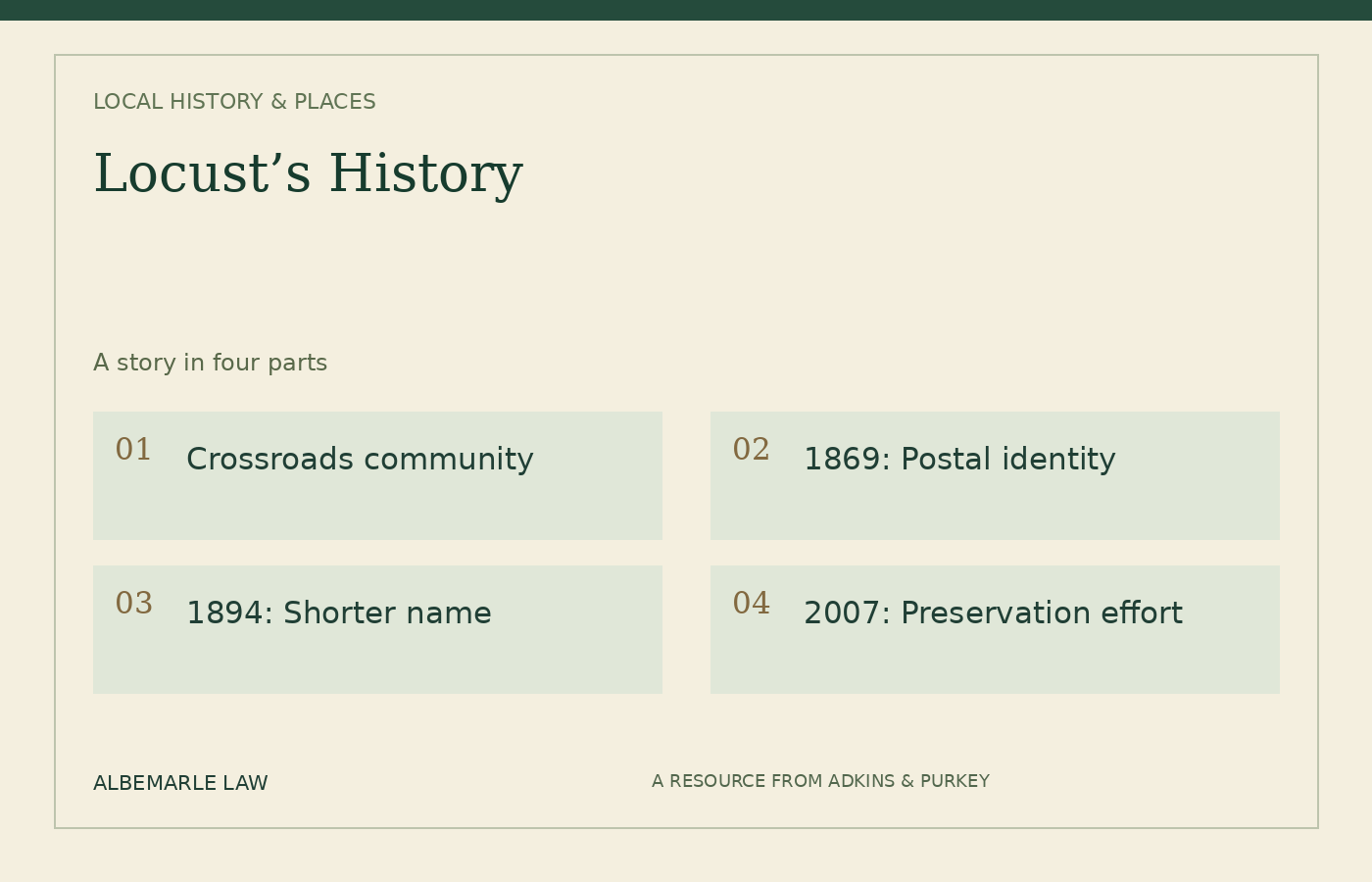
The City of Locust's history places the community's beginnings in the late 1860s and describes its earlier identity as Crossroads. It notes travel toward neighboring counties and the importance of routes connecting the area with other communities. Location mattered because people already had reasons to move through the landscape.
When reading a crossroads history, ask how a route functioned at the time. A road that now carries commuters may once have served farm trade, mail, or travelers with animals. The physical line can remain while the speed, purpose, and experience of travel change substantially.
A shared well reveals everyday history
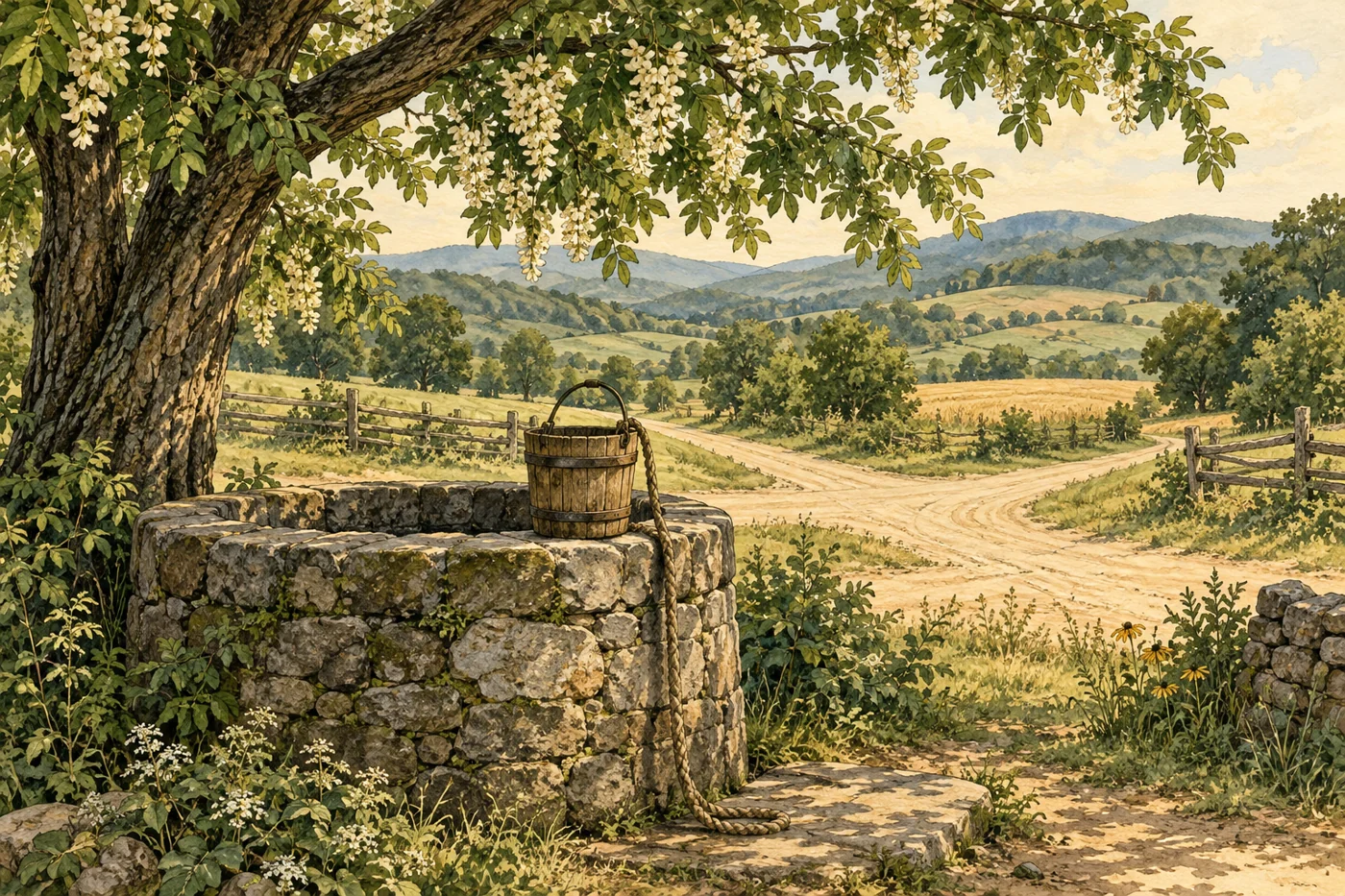
The city's account describes a central well near a locust tree that supplied residents, travelers, and livestock. That detail shifts attention from formal government and prominent buildings to daily work. Water access shaped household routines and created a place where people encountered one another.
A local history becomes richer when these practical systems are considered. Who carried water? How far did people travel? What happened during dry periods? The short municipal account does not answer every question, but it supplies a useful starting point for examining photographs, family recollections, and other records.
From Locust Level to Locust
The city connects an 1869 application for a post office with the naming story. In its account, Maggie Howell suggested Locust Level after noticing a blooming locust tree and the surrounding level fields and road. The name was shortened to Locust on May 29, 1894.
Presenting this as the city's recorded local narrative preserves its source. Naming stories can combine documentary events with remembered details, and careful writing distinguishes those elements. For further research, compare postal records, maps, and contemporary references with later community histories rather than assuming every part of a story has the same evidentiary basis.
Roads connect local and regional history
Locust's crossroads identity places it in a network that includes Albemarle, Charlotte, Concord, Monroe, and surrounding communities. The particular routes and patterns of movement have changed, but the relationship between local life and regional travel remains a useful theme.
Compare this story with Oakboro's roads and railroad history. One account emphasizes the arrival of a depot and the growth of a rail-centered town; the other begins with a crossroads, a water source, and postal identity. Together they show why nearby communities should not be given interchangeable histories.
A historical society grew from local interest
The Locust Historical Society & Museum explains that its organization emerged from residents' interest in preserving the area's history and was formed in 2007. Its account welcomes family histories, photographs, documents, and artifacts as part of that work. The collection is therefore connected to community participation rather than only to official government records.
That origin offers a practical lesson: preservation often begins when someone notices that everyday materials are being lost. A photograph of a store, a school program, or a labeled household object may become useful evidence when placed in context. The institution's role is to organize and interpret those materials so they can serve more than one family's memory.
Preserve context along with the object
If you have Locust family materials, identify people, places, approximate dates, and the source of the information. Record uncertainty openly. A note saying that an identification came from a particular relative is more useful than an unexplained name that later readers may mistake for a verified fact.
Keep originals protected and make working copies when possible. Ask the museum about its collection policy before donating or lending items. Ownership, permission to reproduce, and the physical condition of materials can all affect how an institution can use them.

Read growth through what changes and what remains
A community's history continues as roads, neighborhoods, and businesses change. An older map or photograph can help explain the relationship between a former crossroads and a present commercial area. Look for continuity in routes and public spaces as well as changes in buildings and land use.
Avoid treating every change as either loss or progress without examining its effects. Different residents may experience the same development differently. Public records, planning materials, and oral histories can reveal those perspectives when read together with attention to date and purpose.
Plan a local-history visit
The city's history page identifies the museum on Officer Jeff Shelton Drive. Confirm current hours and access through the city or museum before traveling. Pair a visit with a specific question about a family, trade, road, or institution, then follow the source trail afterward.
Locust's story reminds us that the history of Stanly County includes the systems of everyday life as well as major industries and public buildings. Return to our Stanly County overview or Albemarle history to see how those local stories connect across the county.
Explore with these questions
- Search both Locust Level and Locust in older records
- Treat the naming story as an attributed local account
- Preserve dates and identifications with family photographs
- Confirm museum hours and donation procedures directly
Questions readers ask
What was Locust called earlier?
The city’s account describes the earlier Crossroads community and the name Locust Level, shortened to Locust in 1894.
How can family records contribute to local history?
Well-identified photographs, documents, and oral recollections can add valuable context. Contact the historical society about its collection and donation policies.
Continue reading
This community-education article is part of Albemarle Law’s separate history collection. For legal information, visit the family-law and estate-planning library. Explore additional regional writing at The Lake Norman Brief.
Attorney advertising. Historical and community information; confirm visitor information with the responsible organization. Illustrations are conceptual, not archival photographs. No attorney-client relationship is created by this page or an initial inquiry.