On this page

A phone can contain years of family history, but volume is not the same as useful evidence. A lawyer reviewing a custody or divorce matter needs to understand what a record shows, where it came from, and why it matters. Albemarle and Stanly County clients can make a consultation more productive by organizing digital records carefully and preserving context.
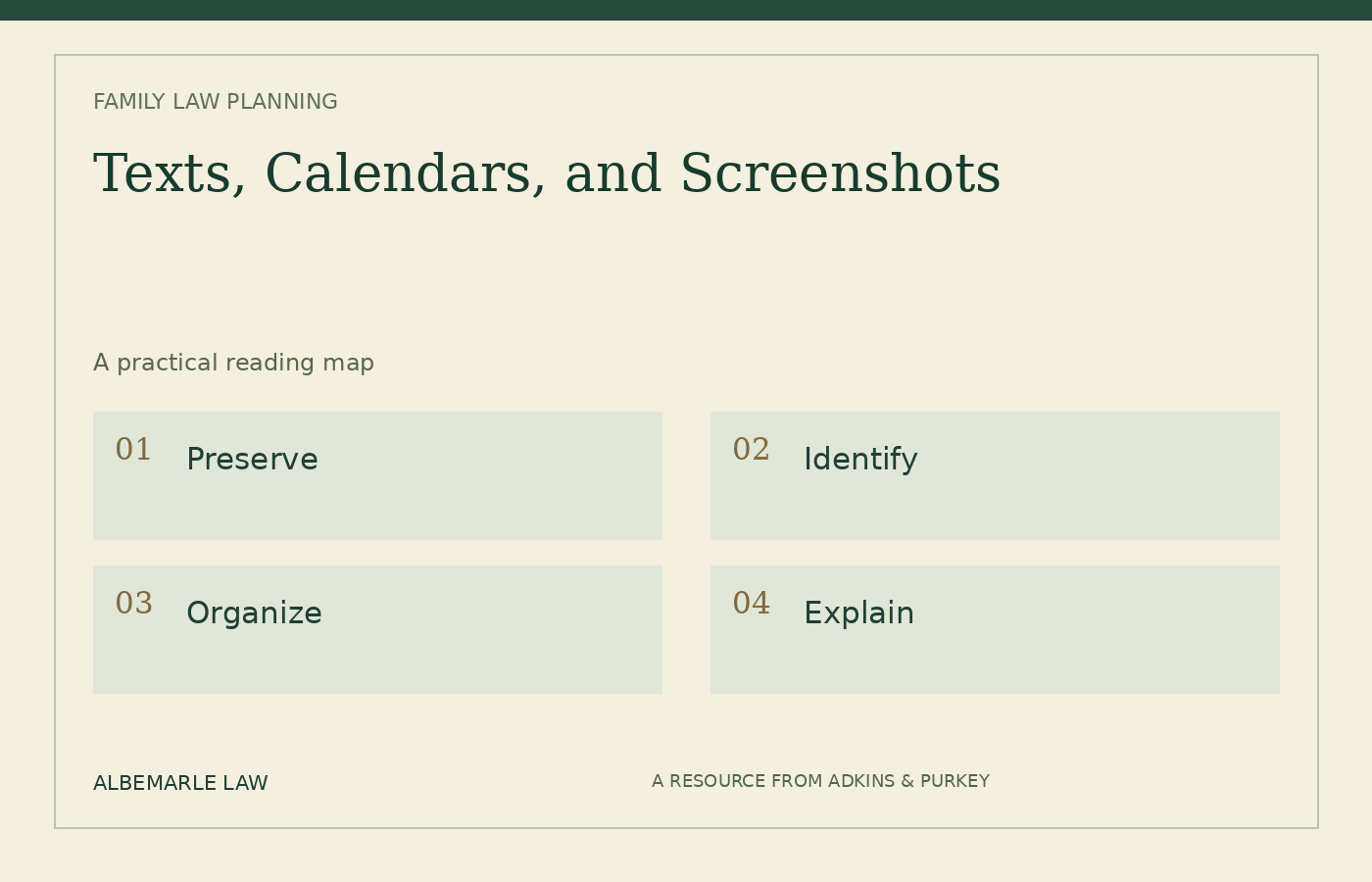
Preserve the original before making a summary
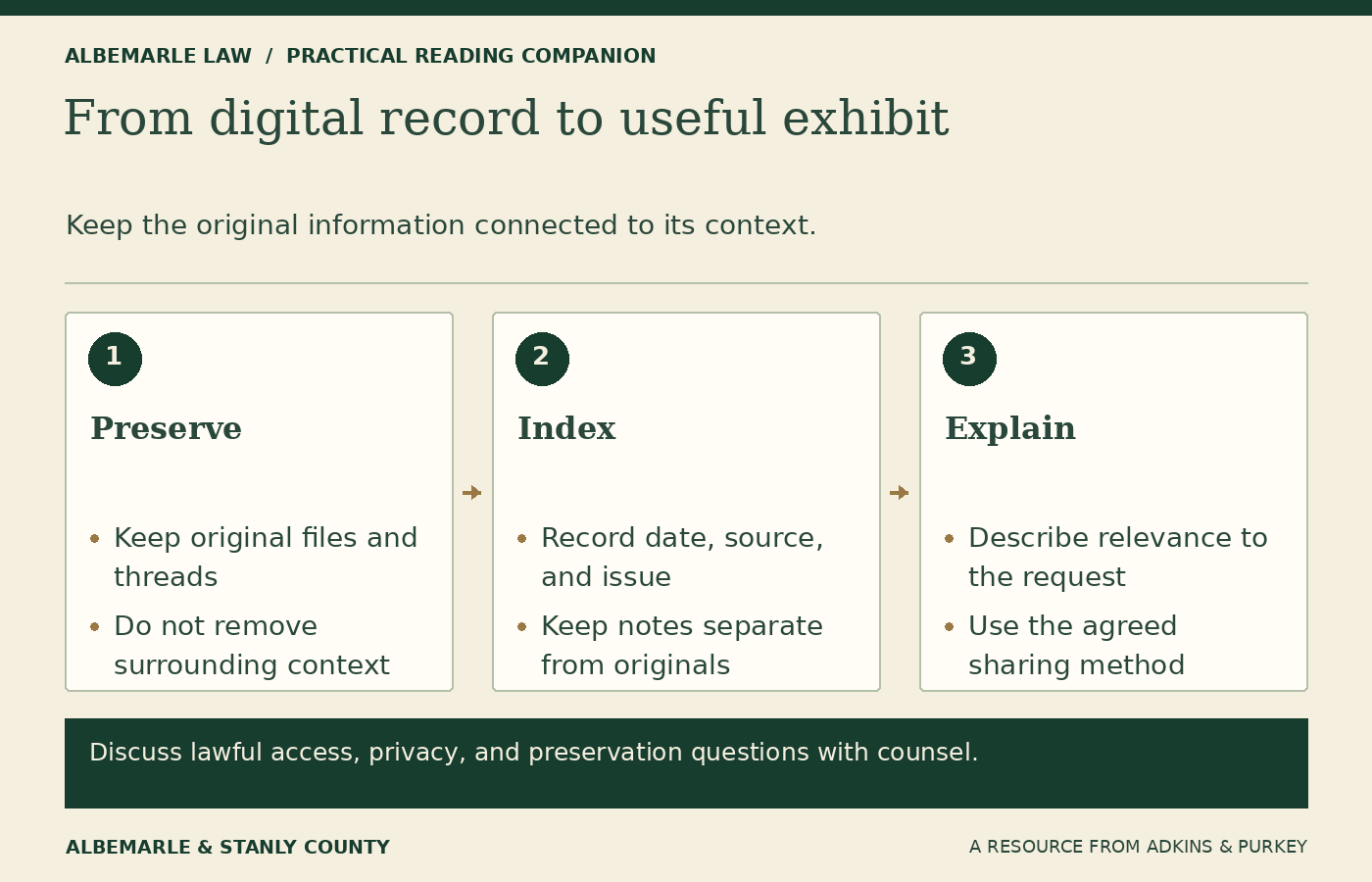
Keep the original message thread, file, calendar, or photograph when you can lawfully do so. A screenshot may omit a date, sender, or surrounding exchange. Exporting a complete conversation, where the application permits it, may help preserve context. Do not edit the original to add comments. Make a separate working copy or index for notes so the underlying material remains distinguishable.
Build an index around issues
Group records by practical topic: exchanges, school decisions, payments, property, or another issue counsel identifies. For each item, note the date, people involved, source, and a brief neutral description. A useful entry says that a pickup was changed at a particular time; it does not merely label the other person dishonest. The index should help someone locate the original quickly.
Keep favorable and unfavorable context
A selected message may look different when the previous exchange is included. Give your lawyer the full record, including material that may complicate your position. Surprises are harder to manage than difficult facts disclosed early. Do not delete posts, alter accounts, or destroy records after a dispute arises. Ask counsel about preservation duties and any instructions specific to the case.
Respect privacy and lawful access
Do not guess passwords, impersonate another person, install surveillance software, or enter private accounts without authorization. Rules concerning recordings, account access, and disclosure can be fact-sensitive. Ask before collecting material in a questionable way. A desire to prove a point does not make every collection method lawful or make the resulting material admissible.
Explain the connection to the requested relief
For a parenting dispute, connect the record to the child's schedule, safety, care, or another relevant issue. For financial questions, identify the transaction or statement and what remains disputed. A photograph or text rarely answers every question alone. Witness testimony, account records, or other context may be needed. Your lawyer can evaluate authentication, hearsay, relevance, and other evidentiary concerns.
Share through an agreed method
An initial contact form is not the place to upload a complete private family history. Start with the type of matter, an urgent deadline, and contact information. After conflict screening and instructions, use the method the firm provides for documents. Adkins & Purkey can then review an organized record and discuss what evidence is needed for the particular Albemarle or Stanly County case.
Bring these to the conversation
- Original files and complete conversations
- Index with dates, sources, and issue labels
- Separate notes explaining relevance
- Questions about access, privacy, and preservation
Questions readers ask
Is a screenshot always admissible?
No. The court must apply the relevant evidentiary rules, and context or testimony may be needed. Preserve the original and discuss how it can be authenticated.
Should I post my evidence online?
Public posting can create additional problems and expose private family information. Discuss communication and preservation with counsel before publishing material about the dispute.
Continue reading
Explore more guidance through Adkins & Purkey, the Lake Norman Brief, and Adkins Law in Huntersville. These resources do not replace advice about your individual case.
If a separate DWI charge overlaps with your family concerns, LKN DWI Defense explains that distinct process. A criminal allegation does not by itself decide a custody issue.
Attorney advertising. General legal information, not legal advice. Laws and procedures can change. Every matter requires individual review. Illustrations are conceptual and do not depict actual clients. No attorney-client relationship is created by this page or an initial inquiry.