On this page

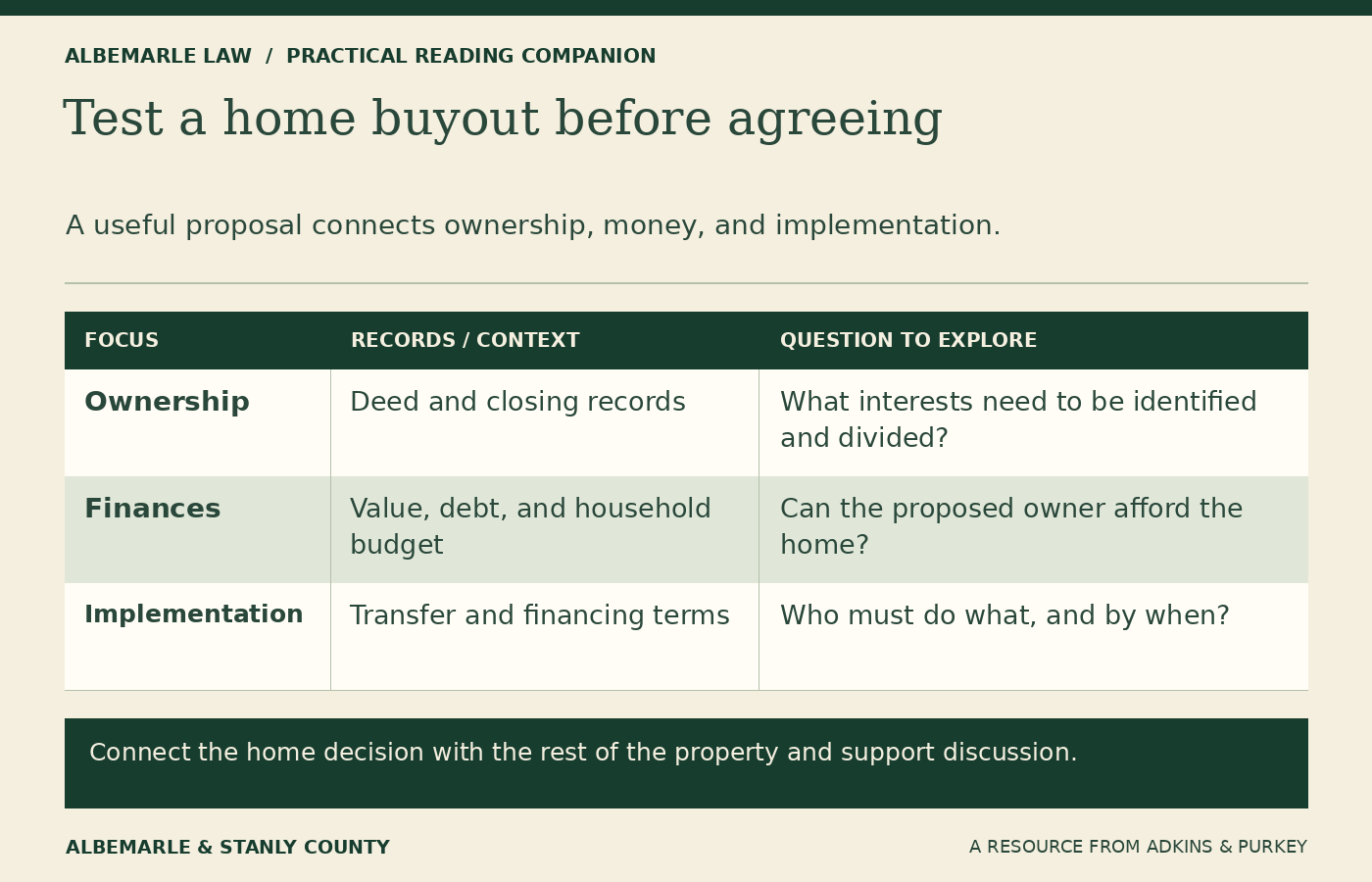
A home is both an asset and a place where a family has built its routines. That makes a divorce buyout emotionally important and financially complicated. Before an Albemarle spouse agrees to keep the house, the discussion should address more than an estimated sale price. Title, loan obligations, repair needs, and the ability to carry future expenses all deserve a separate answer.
What interests are being divided?
Find the recorded deed, closing documents, loan statements, and information about how the property was acquired. Property classification can depend on dates, sources of funds, and other facts. A name on a deed or loan is relevant but does not necessarily resolve the equitable-distribution analysis. If an inheritance or premarital funds contributed to the home, preserve the records rather than relying on a family recollection of the transaction.
What is a supported value?
A tax assessment, an online estimate, a broker's opinion, and an appraisal serve different purposes. Identify the valuation date and method under consideration. Significant repairs, additions, or damage should be documented. If the parties use a negotiated value, they should understand the assumptions behind it. A well-supported agreement is easier to evaluate than one based on a favorable number selected from several websites.

What debt and costs remain?
Obtain current mortgage and home-equity balances and ask whether other liens or obligations affect the property. A divorce agreement assigning a debt does not by itself change the lender's contract. A deed transfer does not automatically release a borrower from a note. Discuss refinancing, lender approval, sale contingencies, and what happens if an intended loan cannot be obtained. The implementation plan should anticipate that possibility before the deadline passes.
Can the household afford the property afterward?
Build a forward-looking housing budget that includes taxes, insurance, utilities, maintenance, and irregular repairs. Compare it with realistic income and the rest of the proposed settlement. Consider whether buying out equity would leave too little cash for emergencies or legal obligations. Keeping a familiar home may be a priority, but the practical question is whether the arrangement is sustainable once one household becomes two.
How will the agreement be carried out?
A workable provision identifies the sequence: valuation, financing, payment, deed preparation, delivery, and any release required. If sale becomes necessary, address listing decisions, access, repairs, offers, and expense responsibility. Occupancy while the process is pending is another issue. Do not sign or record a deed without understanding how that act fits into the complete transaction and the protections expected in return.
Connect the property decision to the whole case
A home proposal may interact with support, retirement division, taxes, and the children's schedule. Equitable distribution generally requires timely assertion before absolute divorce, subject to limited statutory exceptions. Bring the full financial picture to the consultation. Adkins & Purkey works with Albemarle and Stanly County families to identify the documents and decisions needed for an informed discussion of property division.
Bring these to the conversation
- Recorded deed and purchase closing papers
- Mortgage, equity-line, and lien information
- Valuation evidence and repair estimates
- Post-separation housing budget and financing questions
Questions readers ask
Does signing a deed remove me from the mortgage?
Not by itself. Ownership and personal loan liability are different issues. Review the lender requirements and the proposed closing sequence with counsel.
Is marital property always divided equally?
North Carolina presumes an equal division of marital and divisible property is equitable, but statutory factors can support an unequal distribution. Classification and valuation come first.
Continue reading
Explore more guidance through Adkins & Purkey, the Lake Norman Brief, and Adkins Law in Huntersville. These resources do not replace advice about your individual case.
Attorney advertising. General legal information, not legal advice. Laws and procedures can change. Every matter requires individual review. Illustrations are conceptual and do not depict actual clients. No attorney-client relationship is created by this page or an initial inquiry.